The Relevance of Court Reporting in Ensuring Accurate Legal Proceedings
Court reporting is an essential element of the legal system. It offers a unbiased and specific record of court activities. This documents is important for charms and lawful research study, making sure that every spoken word is recorded properly. The stability of legal process depends heavily on these transcripts. Nevertheless, the duty of technology and evolving practices elevates questions about the future of court reporting and its influence on justice. What changes lie ahead?
The Role of Court Reporters in the Legal System
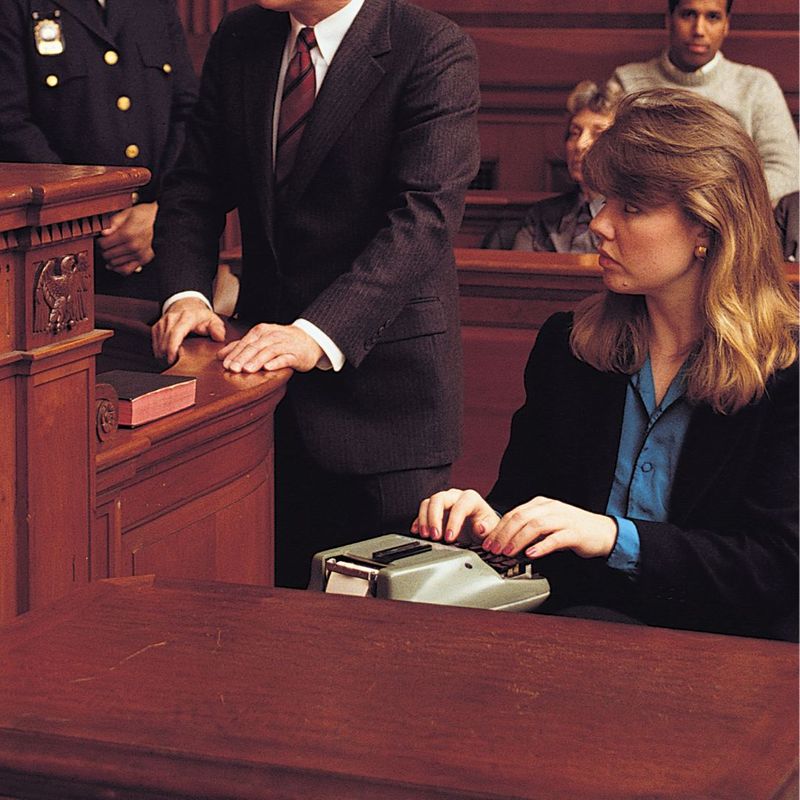
Stenotype reporter play an important duty in the lawful system by giving precise and neutral records of proceedings. Their work warranties that court discussions, witness testaments, and lawful debates are faithfully recorded, working as an official document for future referral. This documents is important for allures, lawful research study, and keeping the stability of judicial procedures. Stenotype reporter are educated specialists proficient in stenography and various taping technologies, enabling them to capture spoken words with accuracy. They should have a thorough understanding of legal terms and court protocols, assuring that their transcripts meet the criteria called for by the judicial system. Additionally, they may offer real-time transcription services, permitting lawyers and judges to access information instantaneously during process. By fulfilling these duties, stenotype reporter facilitate transparency, responsibility, and the reasonable administration of justice, therefore reinforcing the foundational concepts of the lawful system.
Making Sure Accuracy in Transcription
Precision in transcription is critical for maintaining the integrity of legal process. Court reporters meticulously capture every word spoken during hearings, trials, and depositions, assuring that the official document mirrors the real discussion and exchanges that happen. This precision is critical, as even small errors can cause significant misunderstandings or misinterpretations of the law.
To achieve this degree of precision, stenotype reporter employ different techniques, including energetic listening and making use of specialized shorthand methods. Constant training and familiarity with legal terms additionally enhance their capacity to produce trusted records.
The verification process is important; press reporters typically assess their records for possible inconsistencies prior to final entry. This persistance not only upholds the quality of lawful documentation but also supports the judicial procedure, enabling lawyers and judges to reference exact documents when choosing. Eventually, precise transcription cultivates count on in the legal system and guarantees that justice is offered.
The Impact of Technology on Court Reporting
As technology remains to develop, its impact on court reporting has actually ended up being increasingly substantial. Digital taping systems and speech recognition software application have changed traditional techniques, providing brand-new devices for recording spoken dialogue. These advancements enhance effectiveness and access, allowing quicker transcription and real-time reporting. Furthermore, cloud-based systems assist in smooth sharing of records, boosting collaboration among lawyers.
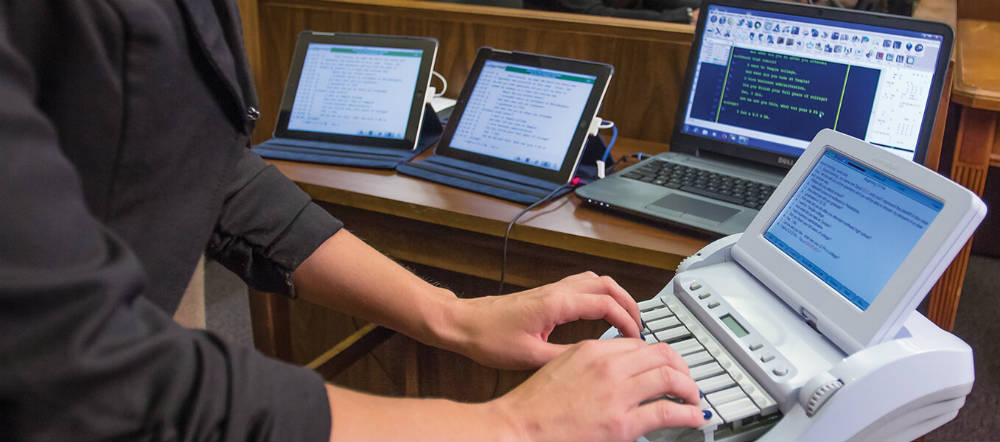
Eventually, while modern technology boosts the speed and accessibility of court reporting, it underscores the demand for human oversight to maintain the top quality and accuracy necessary for legal proceedings. As the area proceeds to adapt, the combination of technology will certainly play a critical duty in forming the future of court reporting.
The Value of Discretion and Stability
Privacy and integrity are fundamental principles that underpin the method of court reporting in lawful proceedings (durham court reporting). Stenotype reporter are turned over with sensitive information, requiring them to keep discretion and protect the privacy of all celebrations involved. This discretion fosters a relying on environment where witnesses and litigants can talk view it openly, making sure that the legal process is reasonable and just
Integrity is just as necessary; court reporters should give unbiased and exact records, offering as the authorities document of the procedures. Any type of gap in integrity can lead to misinterpretations, potentially affecting situation outcomes and weakening the judicial system.
Future Trends in Court Reporting
The landscape of court reporting is evolving in feedback to technological advancements and the altering requirements of the legal career. Arising trends include the combination of man-made knowledge and real-time transcription solutions, which additional reading enhance performance and precision. Court reporters are progressively making use of digital tools, such as cloud-based platforms, permitting smooth collaboration among lawful teams and simpler accessibility to transcripts.
Furthermore, the surge of remote court proceedings has triggered the advancement of specialized training for press reporters in online environments. This change not just adapts to the demands of a globalized legal landscape yet likewise addresses challenges positioned by geographical barriers.
Additionally, the focus on access is driving advancements in transcription layouts, guaranteeing that lawful records satisfy varied target markets. On the whole, the future of court reporting is defined by a mix of typical abilities and modern-day technology, placing press reporters as crucial players in the legal procedure.
Regularly Asked Questions
What Qualifications Are Needed to End Up Being a Court Press Reporter?
To become a stenotype reporter, people usually require a high institution diploma, specialized training in court reporting, efficiency in shorthand or voice writing, and accreditation or licensing, depending upon the territory and particular work requirements. - durham court reporting
Exactly How Do Court Reporters Maintain Their Skills Over Time?
Stenotype reporter preserve their abilities in time through constant education, method, and engagement with professional companies. They often participate in workshops, make use of advanced innovation, and participate in qualification programs to improve their proficiency and adapt to developing standards.
What Difficulties Do Court Reporters Face in Their Occupation?
Stenotype reporter encounter countless difficulties, consisting of taking care of high-pressure atmospheres, adapting to varied accents and languages, maintaining technological proficiency, guaranteeing precision under tight due dates, and dealing with psychologically billed statements that might impact focus and efficiency.
Are Court Reporters Associated With Various Other Lawful Setups Besides Court Rooms?
Court press reporters are indeed involved in various legal settings past courts, consisting of depositions, settlement hearings, and management process. Their knowledge guarantees accurate transcripts in these settings, adding to the quality and reliability of lawful documents.
How Do Stenotype Reporter Manage Stressful Situations During Process?
Stenotype reporter manage difficult situations by maintaining emphasis, using efficient time monitoring skills, and my blog using their training to continue to be tranquil. They frequently exercise deep breathing and employ techniques to minimize disturbances, guaranteeing precise documentation under pressure.
Court reporting is an important part of the legal system. Court press reporters play an essential duty in the lawful system by providing accurate and neutral transcripts of procedures. Inevitably, while technology boosts the rate and ease of access of court reporting, it underscores the requirement for human oversight to keep the quality and accuracy vital for lawful process. Confidentiality and honesty are basic concepts that underpin the technique of court reporting in lawful procedures. Court press reporters are without a doubt included in different legal settings past court rooms, consisting of depositions, arbitration hearings, and management process.